Quick Commerce Advertising in India: Is Blinkit and Zepto the Next Big Marketing Opportunity?
Ten minutes. That's all it takes for a pack of chips, a phone charger or a bottle of face wash to reach a customer's door in many Indian cities. Apps like Blinkit and Zepto have changed how urban India shops, and in the process they've quietly become something else too: advertising platforms brands can't ignore.
If your product is sold on these apps, or could be, the question is no longer whether quick commerce matters. It's how to show up there before your competitors take the best spots on the shelf.
Why quick commerce is different from every other ad channel
Most platforms catch people while they're browsing, scrolling or watching. Quick commerce catches them while they're buying. Someone opening a grocery app already has a need and a payment method ready, so an ad here sits a few taps away from a sale rather than several steps away.
There's also a habit effect. These apps are opened often, sometimes several times a week, which gives brands repeated chances to appear in front of the same shopper at the moment of choice.
How brands can advertise on these apps
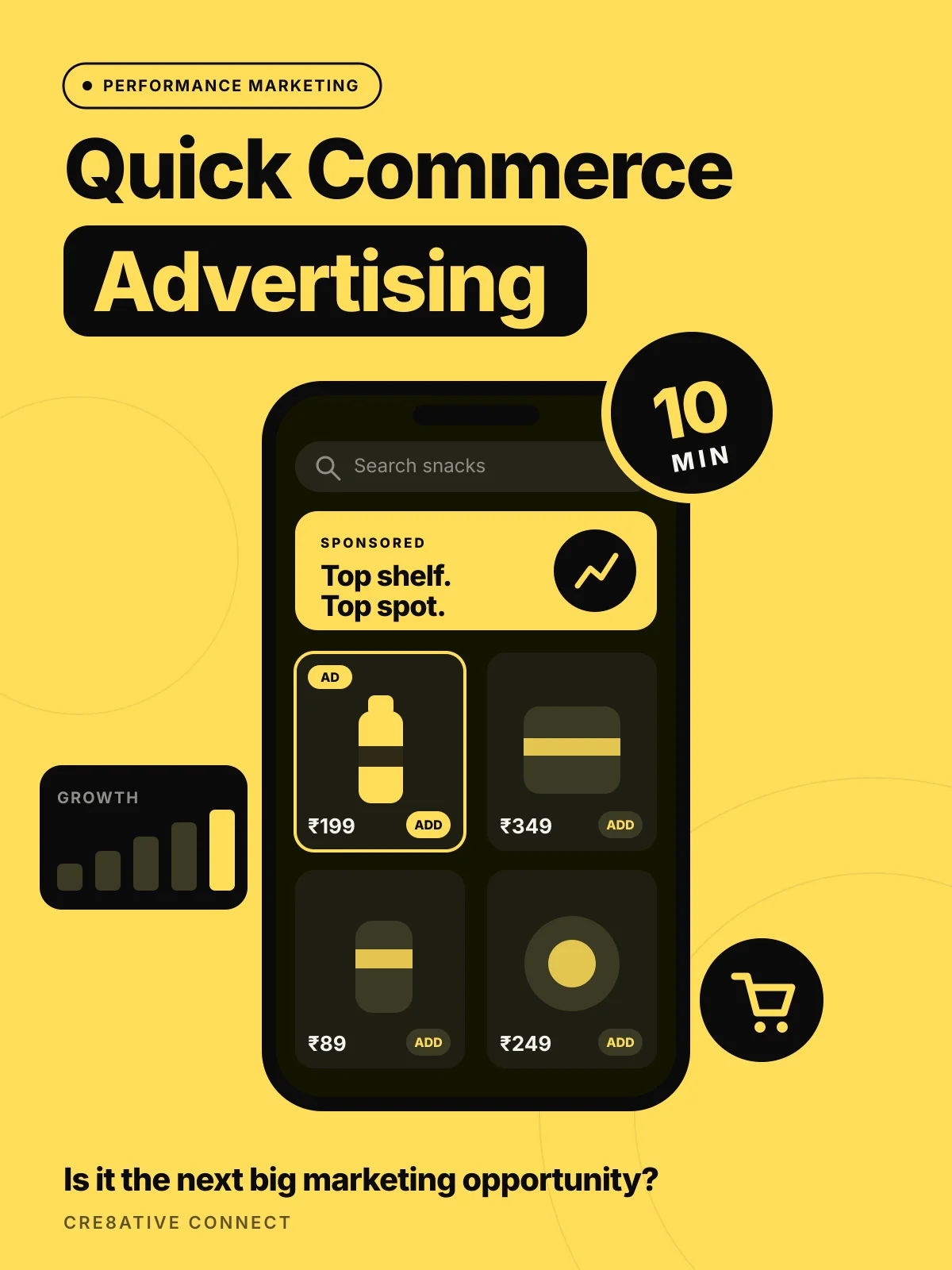
- Sponsored listings in search results, so your product appears when someone looks for your category or a competitor's.
- Banners and category-page placements that build visibility for launches, festive sales and new variants.
- Offers and bundles that give shoppers a reason to try your product over the one they usually pick.
- Strong product pages with sharp images, clear titles and accurate descriptions, because an ad only pays off if the listing converts.
Who should pay attention first
FMCG, snacks and beverages, personal care, beauty, baby products, pet care, wellness and small electronics tend to do well, since they're quick, repeat purchases. D2C brands launching something new can also use these apps to get trial quickly in dense city pockets.
What to watch out for
Quick commerce isn't a free win. Margins can be tighter once platform fees, discounts and ad spend are counted. Stock availability matters too: if your product is out of stock in a local dark store, your ad is paying for a sale you can't fulfil. And because you're working inside someone else's platform, you get less control and less customer data than you would on your own website.
That's why it works best as one part of a bigger plan rather than a replacement for everything else.
So, is it the next big opportunity?
For brands with the right product, yes, it's one of the most promising performance channels in India right now. The smart approach is to start small, test a handful of products and cities, track cost per sale carefully, and keep brand-building going on Meta, Google and your own site so shoppers already know you when they open the app.
Not sure whether quick commerce fits your brand? Our team can help you work out where it belongs in your marketing mix and how much to put behind it.